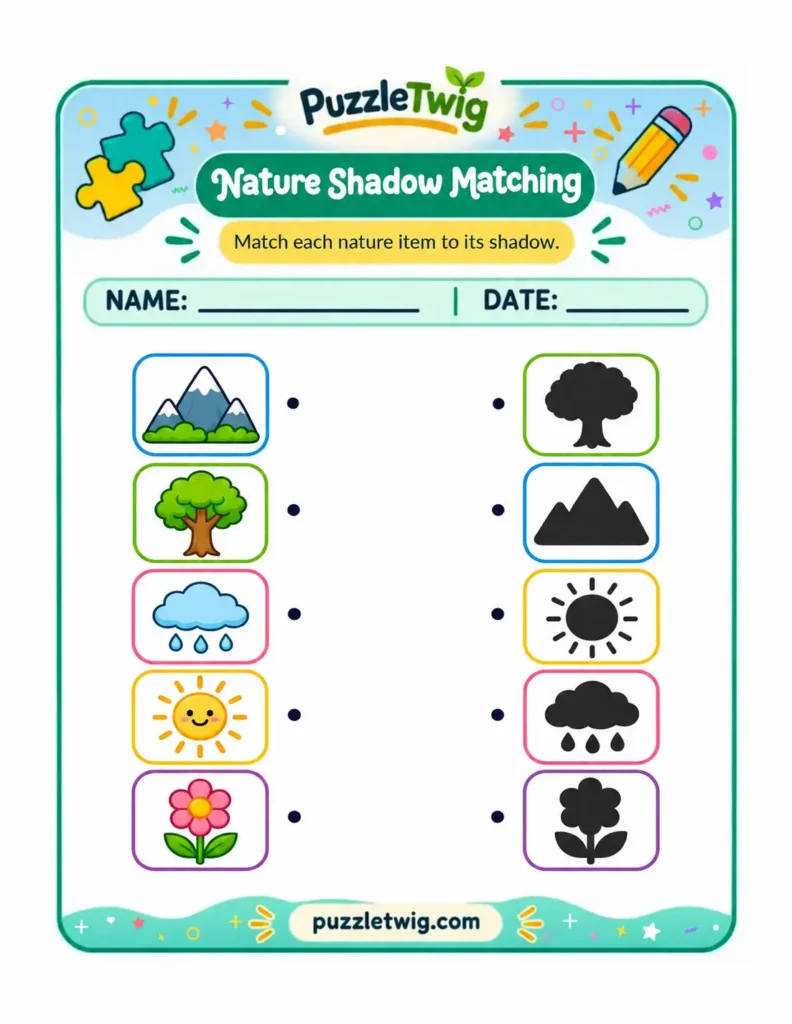
This free nature shadow matching worksheet invites preschool children ages 3–6 to explore five familiar nature pictures through a colorful visual puzzle. A mountain range, leafy tree, rainy cloud, smiling sun, and bright flower each have a matching black silhouette waiting to be discovered.
With 5 picture-and-shadow pairs on one printable page, this nature-themed activity makes practicing visual recognition fun and approachable. The cheerful illustrations encourage children to notice shapes, recognize familiar outdoor objects, and develop observation skills. It’s a screen-free learning activity for preschool classrooms, nature-themed learning centers, or quiet afternoons at home.
Free printable activity
Nature Detectives – 5 Shadow Matches
Children match 5 colorful nature pictures—mountains, tree, rainy cloud, sun, and flower—to their corresponding black silhouettes by drawing lines between the correct pairs.
- Ages 3–6
- Visual discrimination
- Easy
- One-page printable
Materials Needed
- Printed nature shadow matching worksheet
- Pencil or crayon
- Flat writing surface
How to Prepare the Activity
Print the one-page worksheet featuring 5 colorful nature pictures and their matching silhouettes. Provide a pencil or crayon and introduce the nature objects before children begin.
How to Play — Step by Step
- Write your name and date at the top of the worksheet.
- Look carefully at the 5 colorful nature pictures on the left.
- Examine the black silhouettes on the right.
- Choose one picture and study its shape.
- Find the matching silhouette and draw a line connecting the pair.
- Continue until all 5 nature pictures are correctly matched.
What Kids Practice
- Visual discrimination
- Shape recognition
- Attention to detail
- Visual scanning
- Hand-eye coordination
Make It Easier
Start with two or three nature pictures and cover the remaining choices to reduce distractions. Encourage children to compare recognizable outlines, such as the mountain peaks or the sun's rays.
Add a Challenge
Invite children to complete all 5 shadow matches independently without hints. Ask them to explain which shape details helped them recognize each picture and why the other silhouettes do not match.
Helpful Tips for Parents & Teachers
Encourage children to focus on the overall shape of each picture rather than its colors. Remind them to notice distinctive details such as the tree's rounded crown, the flower's petals, and the raindrops beneath the cloud.
Answer Check
A separate printable answer key PDF is available to help parents and teachers check all 5 matches: mountains to the second shadow, tree to the first, rainy cloud to the fourth, sun to the third, and flower to the fifth, counting from the top of the right column.
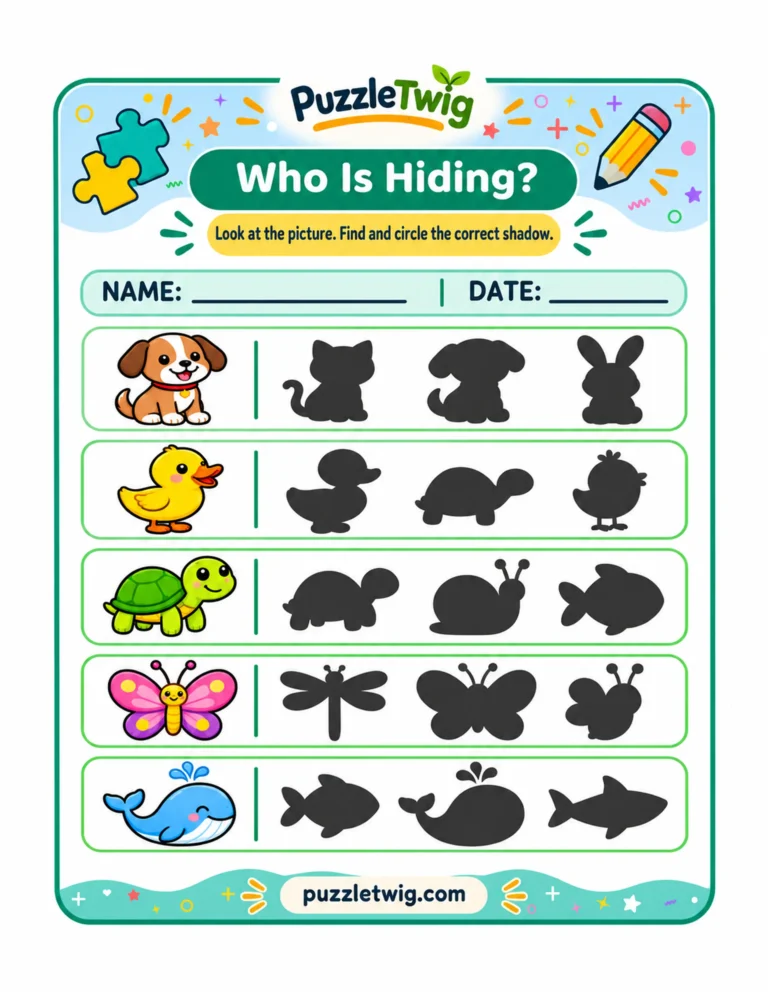
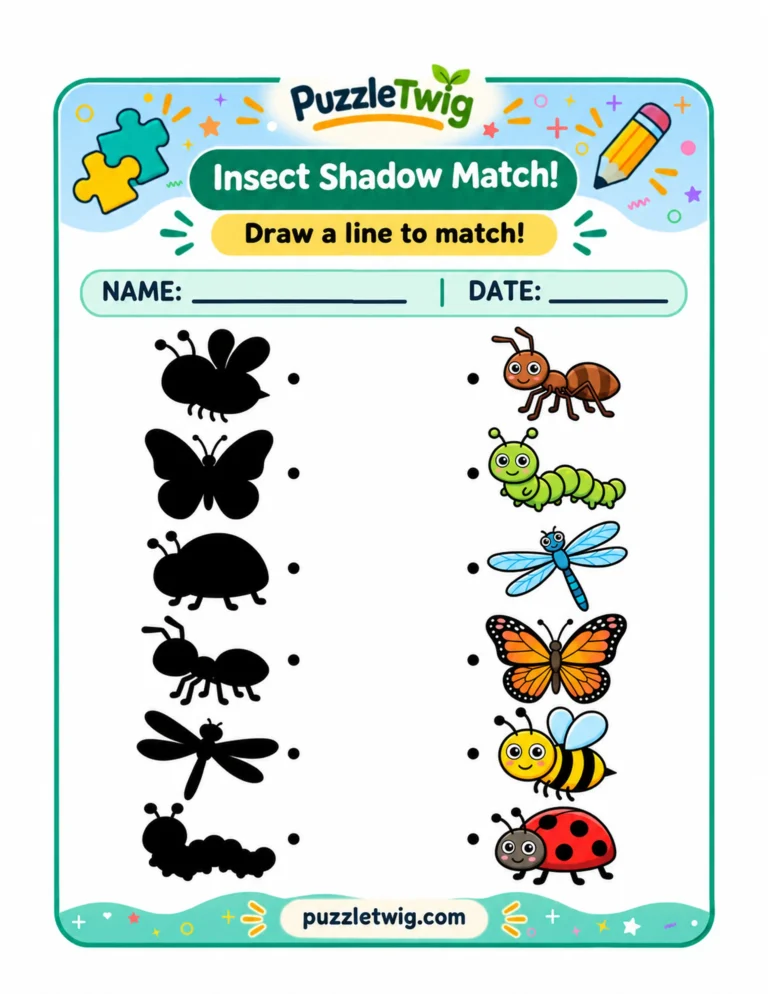
How Nature Shadow Matching Builds Preschool Observation Skills
Nature shadow matching activities help preschool children develop visual discrimination and shape recognition skills. As children compare familiar nature pictures with their black silhouettes, they practice identifying outlines, noticing distinctive features, and recognizing similarities and differences. These abilities support early learning activities involving matching, sorting, and picture recognition.
Exploring nature-themed pictures also creates opportunities to introduce simple vocabulary about the outdoors and weather. Mountains, trees, clouds, sunshine, and flowers provide familiar examples of different shapes found in the world around us. Recognizing these pictures from their silhouettes encourages concentration, careful observation, and confidence in solving visual challenges.
Teacher Tips from the Classroom
- Introduce the Nature Pictures. Have children name the mountains, tree, rainy cloud, sun, and flower before beginning. Invite them to describe where they might see each one in nature.
- Compare Distinctive Shapes. Encourage children to examine the mountain peaks, tree branches and rounded crown, cloud with raindrops, sun’s rays, and flower petals. Ask which features make each picture easy to recognize.
- Encourage Children to Explain Their Matches. After children complete all 5 pairs, invite them to describe how they recognized their favorite picture. Model simple sentences such as “I found the sun because it has rays around its round shape.”
Extend the Fun
- Nature Shape Hunt. Take a short outdoor walk with an adult and invite children to look for trees, flowers, clouds, and other interesting natural shapes.
- Create Nature Silhouette Art. Help children draw simple nature pictures and make matching silhouettes using black construction paper.
- Nature Picture Sorting. Gather pictures of trees, flowers, mountains, sunshine, and rainy clouds, then invite children to sort them into plants, landforms, and weather groups.
Frequently Asked Questions
What age is this nature shadow matching worksheet suitable for?
This free printable is designed for preschool children ages 3–6. Younger children may need help comparing the shapes, while older preschoolers can try matching all 5 silhouettes independently.
What pictures are included in this nature shadow matching activity?
The worksheet features 5 nature-themed pictures: mountains, a tree, a rainy cloud, a sun, and a flower. Children match each colorful picture to its corresponding black silhouette.
Does this nature shadow matching worksheet include an answer key?
Yes! A separate printable answer key PDF is available with the activity. Parents and teachers can download it to check all 5 picture-and-shadow matches and review the completed worksheet with children.
How can I help my child if they struggle to match the silhouettes?
Encourage your child to examine one colorful picture at a time and describe its outline. Help them notice recognizable details, such as the mountain peaks or the sun’s rays. If needed, show only two possible silhouettes before introducing the remaining choices.